In late July 2025, New York City’s health department began investigating a cluster of Legionnaires’ disease cases in Central Harlem. By the end of August, 114 cases had been confirmed and seven people had died.
Community clusters of this kind are usually traced to cooling towers, and Harlem was not an isolated event. Research published in Emerging Infectious Diseases documented six community-associated outbreaks in New York City from 2006 onward, causing 213 cases and 18 deaths — three of them in 2015 alone, including the largest recorded in the city.
What makes cooling towers distinctive is that exposure requires no relationship with the building at all.
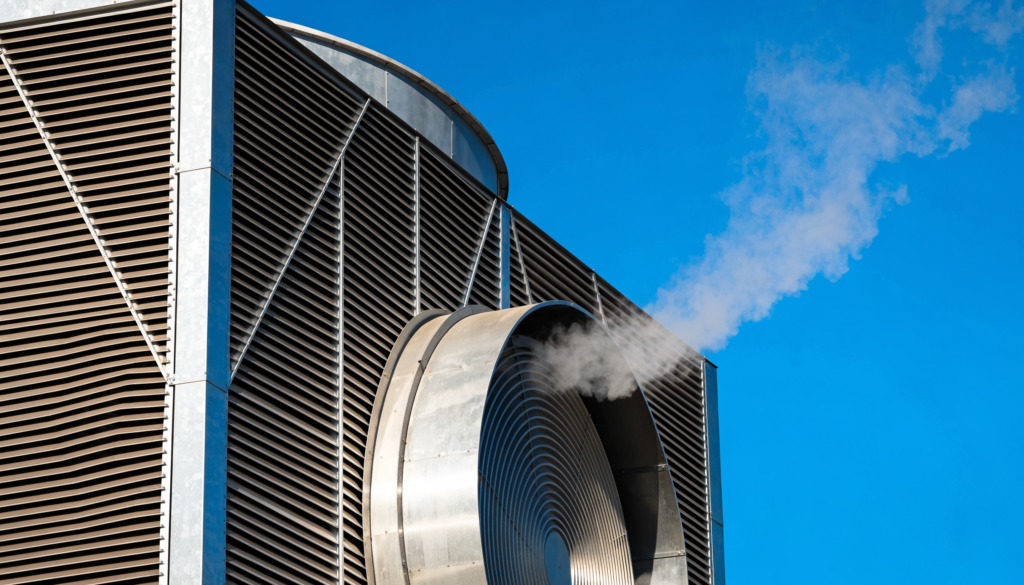
A cooling tower sheds heat by evaporating water, and it releases fine mist as it does. If Legionella has established itself inside, that mist carries the bacterium outward — across the street, along the pavement, into the air intakes of neighbouring buildings. People who never entered the building, never worked there and could not have named it have been infected walking past it.
This is why cooling towers occupy a particular place in prevention policy. A hotel guest can, in principle, ask about a spa pool’s maintenance. A resident of a neighbourhood cannot inspect the roof of an office block they have no connection to. The only protection available to them is a requirement that somebody else maintains it properly, and a mechanism that verifies somebody did.
New York City introduced cooling tower registration and inspection requirements following the 2015 outbreaks. Most of the United States has no equivalent. In most jurisdictions, nobody knows where the cooling towers are.
See what your state requires →
Sources: NYC Health, via CIDRAP; Fitzhenry et al., Emerging Infectious Diseases 23(11), 2017.